
AI Factories and HPC Data Center Expansion: Driving HVAC Innovation
By Anthony McCray, Director, Business Development – Data Centers, Danfoss
HVAC professionals have a front‑row seat to new opportunities in efficiency, heat reuse and grid resiliency.
Market Growth and Regional Impact
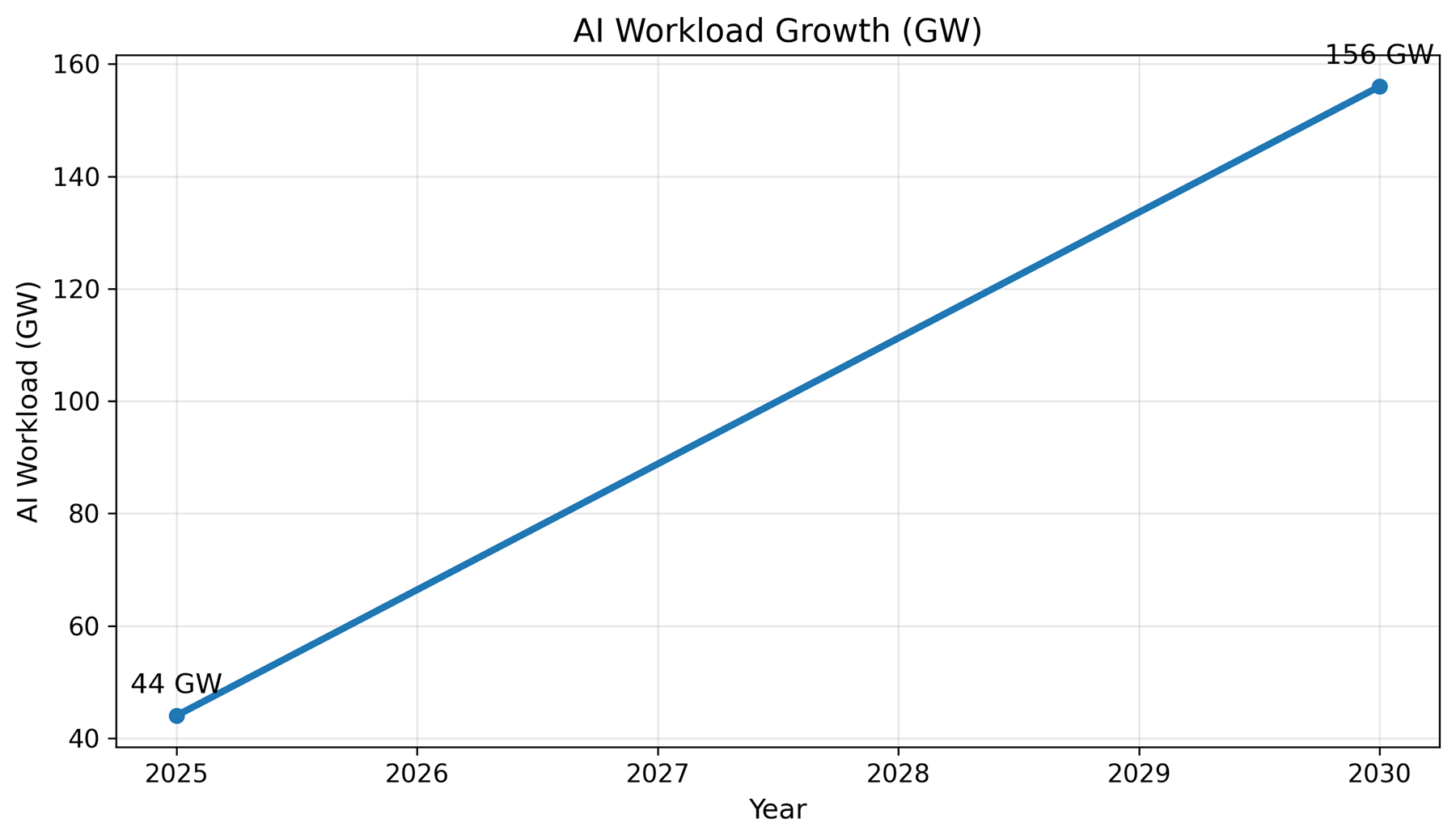
The Southeast is emerging as a national hotspot for high‑performance computing (HPC) and AI factory build‑outs. AI workloads are projected to grow from approximately 44 GW in the mid‑2020s to 156 GW by 2030 as part of a broader capacity expansion that will push total data center demand past 200 GW this decade. For mechanical contractors, that surge translates into larger heat loads, tighter thermal envelopes, and a premium on efficient, water‑smart designs.
AI Factory Concepts
The term “AI factory” captures a production‑grade computing plant purpose‑built for training, inference, and data processing at scale. Today’s reference architectures span traditional DGX systems and next‑generation GB200 SuperPODs, complemented by MGX modular pods and forward‑leaning sustainability concepts such as Kyber 2028. These different computer systems have different infrastructure needs.
DGX vs GB200 SuperPOD
DGX platforms remain proven workhorses for AI training, while GB200 SuperPODs push density and scale for hyperscale deployments. For HVAC planning, the implications are clear: rising rack‑level power densities, expanded liquid cooling coverage, and more rigorous commissioning at pod and cluster levels.
MGX Modular Pod
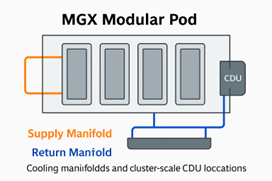
MGX pods embrace a standardized, modular envelope that simplifies siting, phasing, and lifecycle upgrades. For contractors, MGX modularity streamlines distribution runs, enables repeatable liquid circuits, and shortens time‑to‑first‑compute while maintaining quality and safety.
Kyber 2028 Sustainability Concept
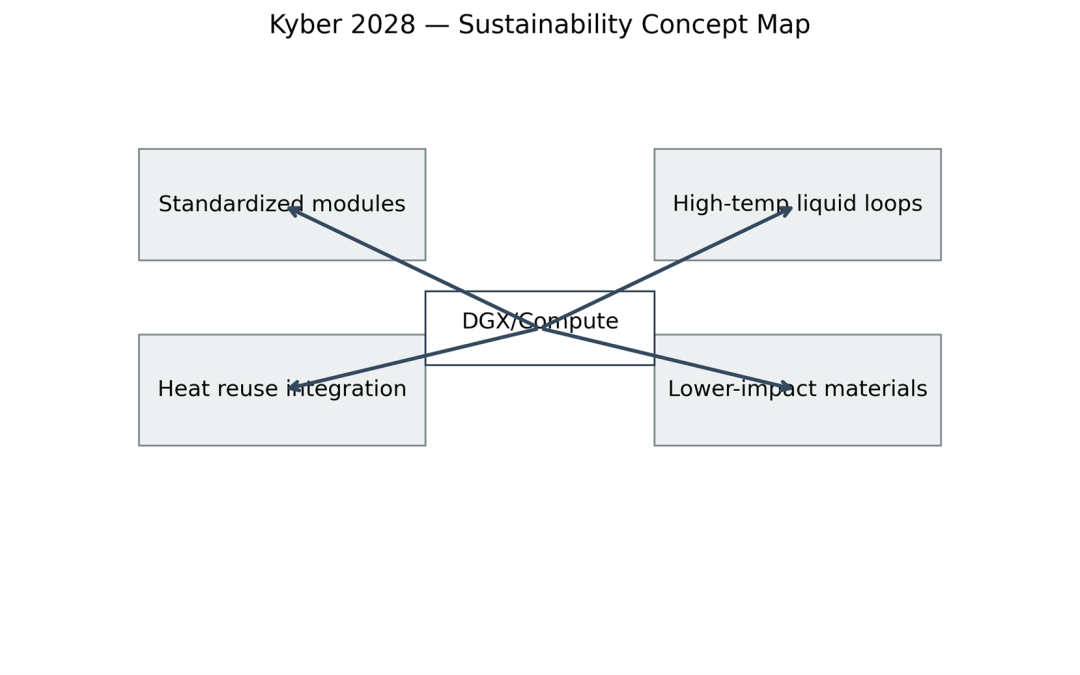
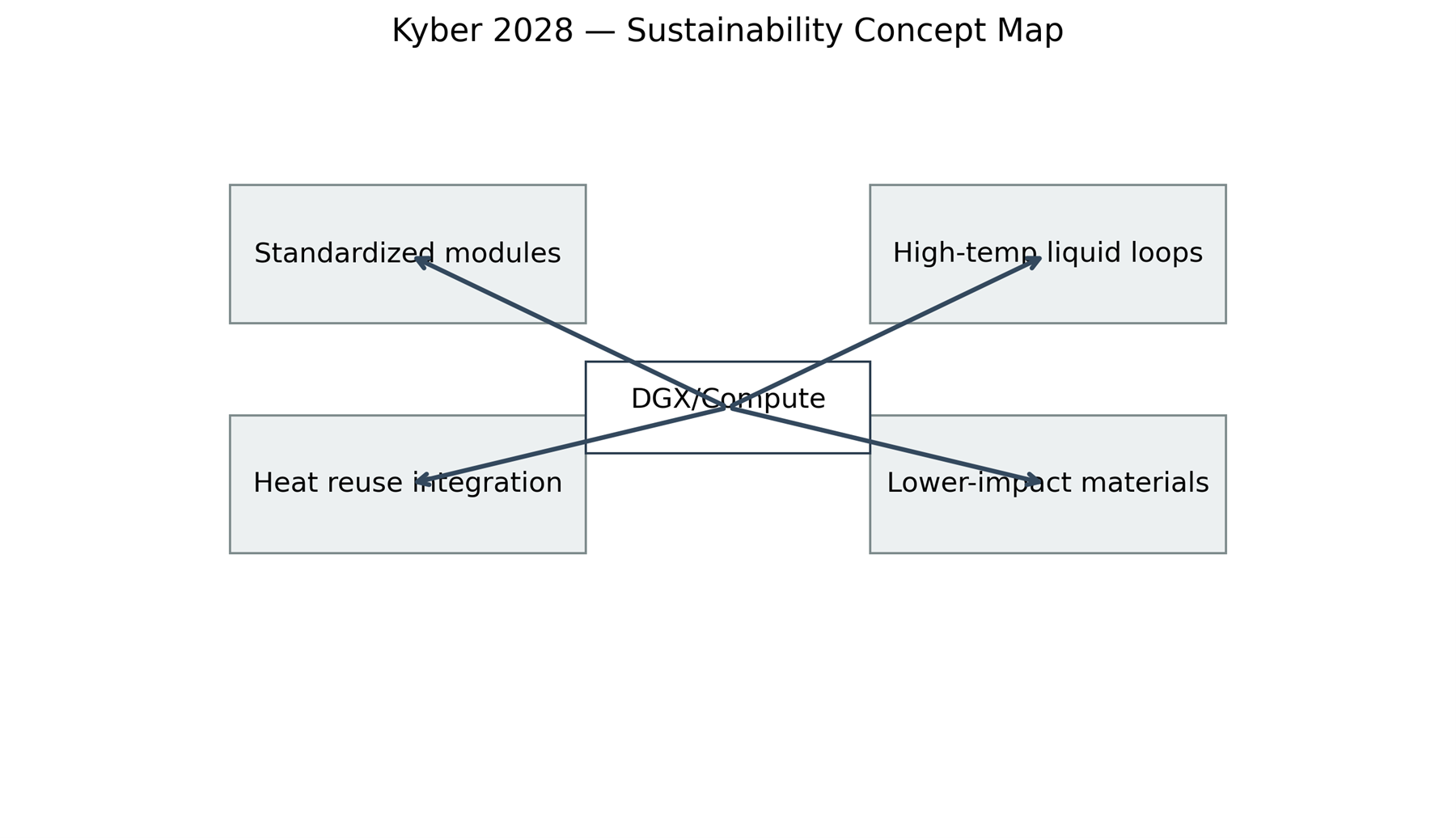
Kyber 2028 imagines a lower‑impact compute plant: standardized modules, high‑temperature liquid loops for efficient heat capture, and a site energy plan that integrates grid‑conscious scheduling with heat reuse. The goal is to cut embodied and operational carbon while improving maintainability.
Cooling and Power Innovations
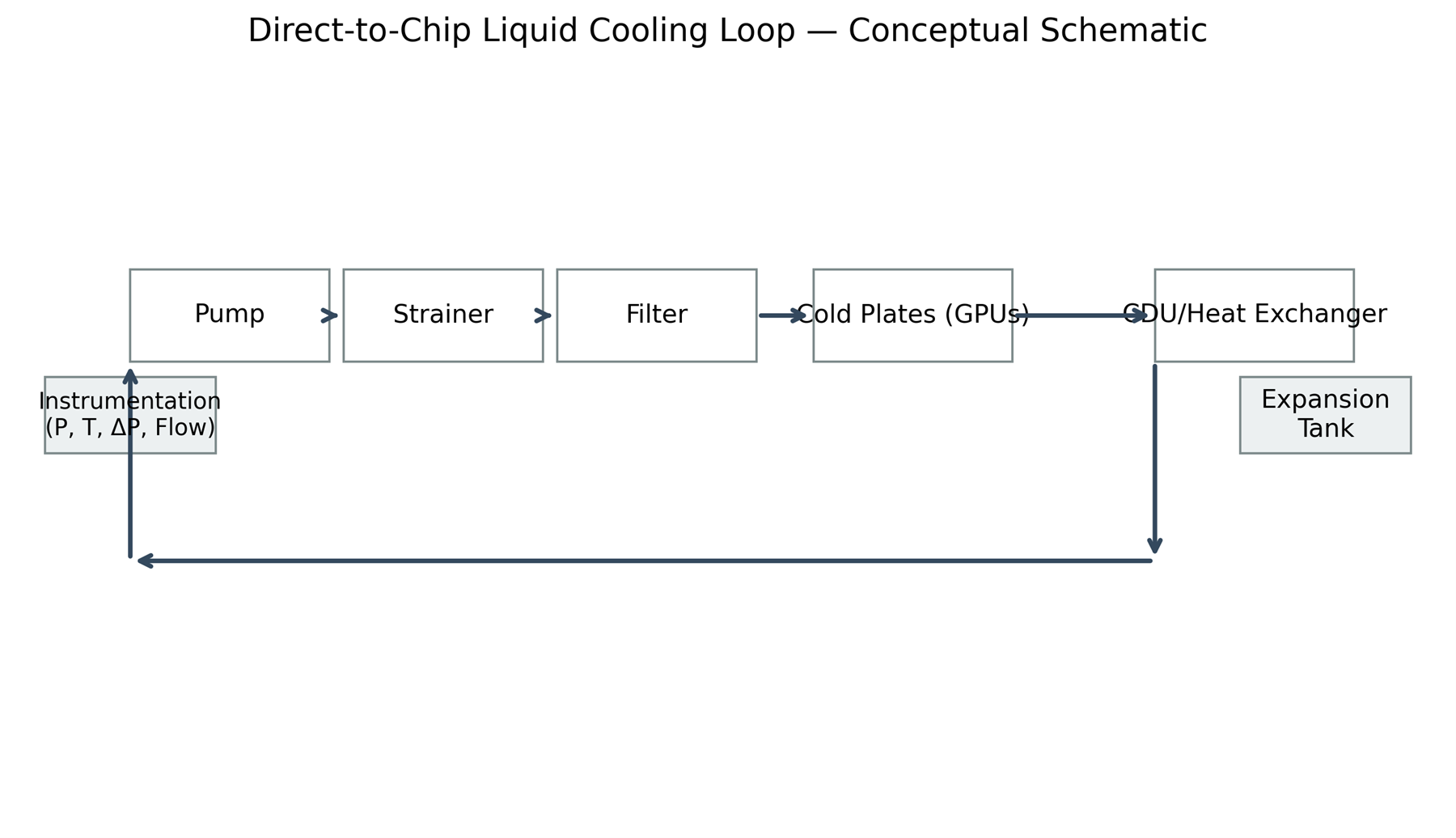
Direct‑to‑chip liquid cooling is now central to AI factory design. These closed loops move heat at higher temperatures and lower fan energy, enabling rear‑door heat exchangers (RDHx), compact CDUs, and optional heat‑to‑use integration. Paired with robust power distribution—high‑voltage DC sidecars, intelligent PDUs, and N+1 critical paths—sites can safely operate at unprecedented densities.
Digital Twins
A digital twin (3D model) reduces deployment risks by virtually commissioning the mechanical plant before metal is cut. Typical steps include importing site geometry, parameterizing heat loads, and control logic, simulating transients (startup, failover, seasonal shifts), and validating monitoring points for continuous assurance.
Southeast Hotspots Map
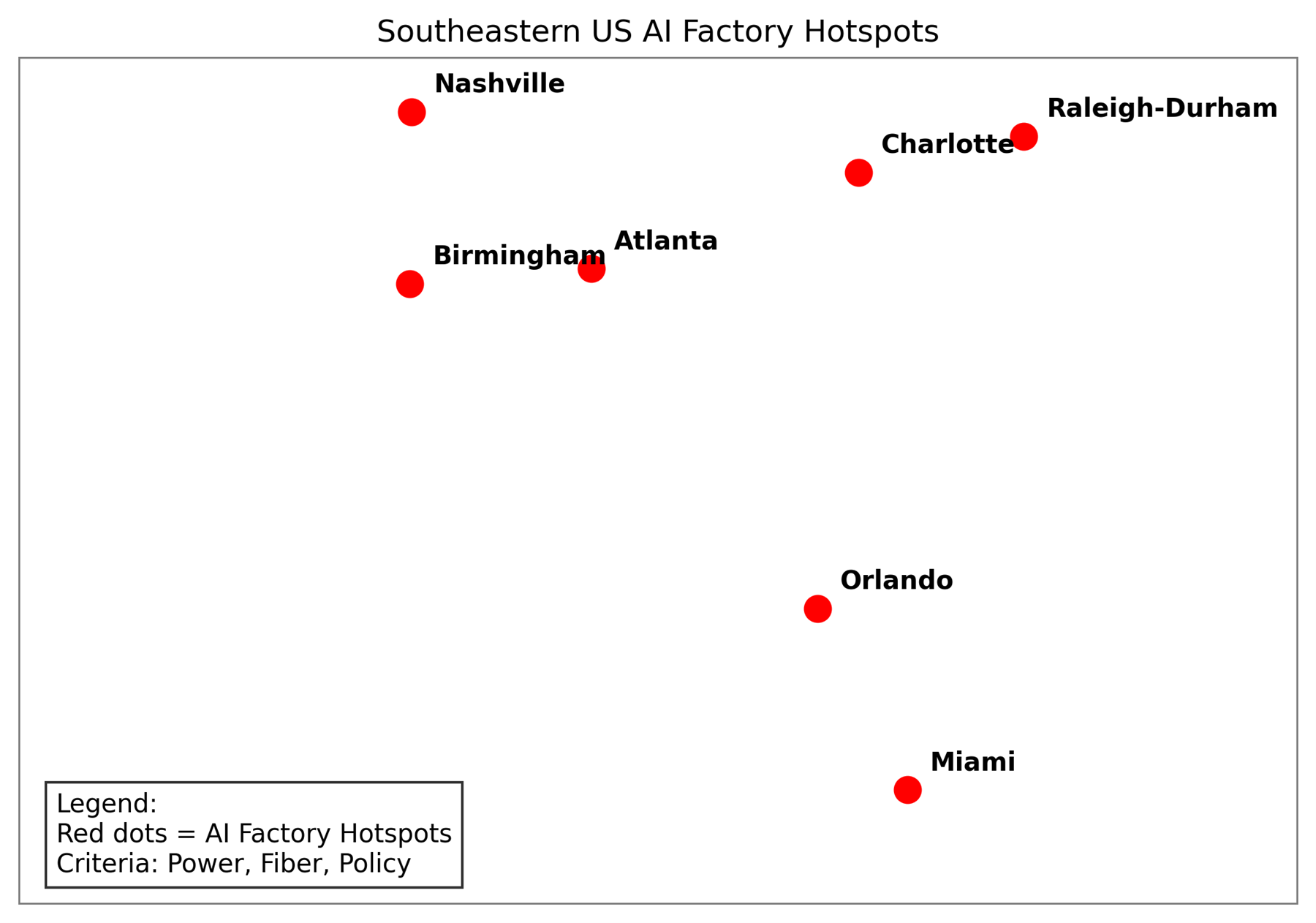
Power availability, fiber reach, and policy incentives are drawing AI factory interest to several Southeast metro areas. For contractors, proximity to these corridors suggests new opportunities in site utilities, district energy tie‑ins, and retrofit heat‑reuse pilots.
Implementation Playbook for Contractors
Here is a practical checklist to accelerate planning and reduce risk:
• Standardize: Adopt repeatable liquid loop specifications—materials, strainers/filters, oxygen control, and bleed/fill procedures.
• Simulate: Build a digital twin to validate control sequences, setpoints, and seasonal operations before procurement.
• Instrument: Specify pressure, temperature, flow, and leak‑detection sensors with calibrated, networked gateways.
• Commission: Execute step‑load and failover tests; document acceptance criteria and MOPs/SOPs.
• Heat Reuse: Evaluate RDHx or HX tie‑ins to district energy or process loads; add heat‑pump lift if needed.
• Water Strategy: Minimize makeup and drift; consider adiabatic dry coolers or hybrid towers to manage water risk.
• Power Integration: Coordinate with electrical teams on HVDC sidecars, PDU selections, and ride‑through strategies.
• Lifecycle: Plan for fluid maintenance intervals, filter changes, and sensor recalibration baked into O&M.
Standardize, Simulate, Scale Materials & Compatibility: Stainless Steel remains a preferred wetted material particularly concerning copper cold plates. Aluminum microchannel heat exchangers, OCP, and field experience shows compatibility can be achieved with the right inhibitors, pH control, and oxygen management. Standardize chemistry sampling and acceptance criteria at FAT/SAT to avoid galvanic concerns and ensure long‑term reliability.
Risk & Quality Assurance: Adopt leak‑before‑pressurize protocols, serialized component traceability, and calibrated transducers (pressure, delta‑P, temperature) on supply/return headers. Pair instrumentation with automated trending to catch drift early and integrate shutdown ladders that protect GPUs while preserving loop integrity.
Community & Heat Reuse Realities: In regions lacking district‑energy networks, consider site‑level reuse—process water preheating, warehouse space heating, or nearby campus tie‑ins. Where temperature lift is needed, size heat pumps for seasonal variability and confirm that reuse economics pencil out given tariffs and interconnection constraints.
Procurement & Vendor Lists: Engage OEMs early to align wetted materials, valve trims, pump seals, and sensor models with owner Approved Vendor Lists (AVL) and Reference Vendor Lists (RVL). Capture lessons learned from serial number zero and feed them into specifications, so each subsequent pod deploys faster, safer, and more predictably.
Expect multi‑megawatt racks, higher supply temperatures, and stringent water‑risk controls as AI clusters densify.

Anthony McCray is the director of business development for data centers at Danfoss Climate Solutions. He has over 20 years of experience in engineering, business development, sales, and leadership across missioncritical wireless telecom and IT ecosystems.
 136772
Other Recent Features
American Supply Association announces two new staff members| April 27, 2026 |
Skilled Trades Enrollment GrowingArticles | April 16, 2026 |
Turn Uncertainty into OpportunityArticles | April 16, 2026 |
Oatey Co. Promotes Two Executives| April 13, 2026 |